
In addition to the piece from The Atlantic that came out in June 2023, this is the second time we’ve been featured in a mainstream publication. If you’re coming to our website for the first time, this page contains our response to New Yorker reporter Sam Kriss’ article on us and our work. We’d like to continue the conversation, correct some inaccuracies in the article, and introduce you to our mission.
Our Views On AI
Sam Kriss has deep concerns about the way AI is impacting society at all levels—he brings up his father’s newfound and disturbing relationship with a chatbot that he has named “Stella.” He also brings up a motley variety of Silicon Valley AI-related cults that either see the AI as a god to worship or a demon to fear. Like Sam, we’re concerned about the impact of technology on our society—the screen addiction, the incidents of psychosis and suicide from LLM usage, the disconnection from family and nature.
Sam finishes the article on a strikingly positive note, saying:
It’s a shame that MAPLE is so secretive about its secret doctrine, because, in a way, I think the group is closer to the truth than anyone else I’d encountered.
He shares our framing of the problem at the beginning:
They believe that A.I. is a religious problem that also has a religious solution. According to their website, they were “Designing Religion for the Age of A.I.”
This is indeed what we believe, and what we are doing about it. Specifically, we are striving to care for life on Earth by designing a religion capable of correctly guiding AI systems
Our society is building AI because it believes data (information, measurement) to be a fundamental and sacred good. Those AI systems are at this time restructuring our society so that we destroy life on the planet.
We got here because we started believing in the measure over reality, and we lost track of the real thing. The dominant culture in our society, which is also the culture in which AI is being developed, is based on fundamentally mistaken ethical views. The fundamental ethical views held within a culture are the religion of that culture; hence the AI problem is a problem of mistaken religion.
Sam summarizes one of the problematic ethical views of the dominant culture, quoting Soryu Forall, the Head Teacher at MAPLE:
“Folks in Silicon Valley who are building these [AI] systems are doing so out of religious fervor,” [Soryu] told me. That religion is extraordinarily destructive. Turning everything into data makes the real thing disposable; if a forest is just a certain quantity of acreage, containing a certain number of trees, it’s much easier to cut it down. A.I. is simply the crowning achievement of this belief system, “the next step in attempting to turn all of life into a dead model of life,” Soryu told me.
This section of Sam’s interview with Soryu Forall is excellent, and you can listen to it here.
The view that the world is, at root, information, and that the primary purpose of our lives is to process that information, has become a bedrock assumption in the places where AI is being developed. Once you mistake information about reality for reality, you are unable to care for reality and the living beings in it, because you fail to notice the difference between them and information about them. This assumption is incorrect, and until it is corrected, AI development will continue to make our society increasingly destructive, for the reasons that Sam himself points out in the article.
There is a second part of the interview dealing with our deep faith in information – under the names accelerationism and representationism – that is also excellent. You can listen to it here.
We see Sam attempting to fight what may seem like an inevitable defeat—the AI industry seems powerful and unstoppable, with their trillion-dollar data centers springing up all over the globe. But we have this for Sam: They are wrong about the nature of the mind and of AI itself. We might place our faith in language and humanities, or we might place our faith in math and science, but both types of faith are misplaced. This is a faith in representation. Our blind faith in representationism is making our situation feel inevitable. But it is not inevitable. It is a matter of where we place our faith. We can get off this runaway train by entering a different mind.
The article says that our main focus is to stop AI. It is not. We do not believe that it is impossible for this technology to be used in service of compassion and wisdom, for increasing our ability to connect with reality, with nature, with each other, and with what truly matters. We do not aim to stop AI, but to guide its development in such a way that it makes our society less destructive rather than more destructive. However doing this skillfully, we claim, is not possible from within the existing mainstream culture—the religious views that got us here. So instead we turn to a new religion, based in Buddhism.
Does this mean we’re trying to build an AI guru, some kind of AI sage, a programmed messiah? The article says we are. However, we are not. We do not believe this is a good or viable idea. You can listen to the part of the interview about our proposal for building AI here.
A central part of Sam’s article hinges on the existence of a secret MAPLE doctrine regarding AI, but we disagree with his characterization of our secret doctrine. This doctrine does exist, and it relates to the solution to the AI problem, not to the definition of the problem.
We don’t keep secrets to try to use information to lord over others or to bait people into thinking we’re special. We have tried publishing our work more openly, and the information was misused, misquoted, and used for harmful ends.
Our expectation is that if we shared the fruits of our work openly, our modern society would have little difficulty extracting from them something that would worsen the problem, not solve it. Therefore we have a team of people committed to practice, and within that group we share our insights. To join that team, you have to join the training.
Soryu Forall’s Upbringing
There is a section that describes Forall’s upbringing. In it, Forall relates his own journey, as a teenager, overcoming the view that humanity “has to go”, or deserves to die, due to the destruction it has wrought on the natural world. We must emphasize that this is a view that Forall overcame as a teenager. He related this story as inspiration for others to also overcome this view.
The truth is that many in our society today actually do believe that humanity has to go. It is common to continue well past childhood without outgrowing that view. Many people are afraid to voice this view, and want to move past it. We at MAPLE do not believe that humanity has to go. Forall is demonstrating the way out of this view, making use of stories from his own life.
The story that this section ought to have portrayed is of someone who, out of compassion, sought out intensive spiritual training overseas and then returned to the US to offer the fruits of that training to our society.
Being an Observer
Perhaps the most important dialog in the whole of Sam’s visit to MAPLE was the conversation in which Forall challenged Sam regarding being an observer, reported in the article in terms of Forall asking Sam when he would “be starting his own spiritual training”. When Sam initially asked to visit us, we invited him to participate in the training. Our understanding was that he would join the monastic schedule for a few days, and report on his experience of that. When Sam came, and as he himself reports in the article, he soon gave up on this, and took up the position of an observer. At the time, he told us that he couldn’t participate in the training because then he wouldn’t be able to report accurately on the situation. This, unfortunately, is exactly backwards. In truth, it is impossible to report accurately on the situation without participating. It is precisely participating in the training that would give a person direct experience of what they are reporting on.
Our society puts extreme faith in information. There is a belief that you can be an observer – i.e. get information about a thing – and then report on it, and be correct. There may not be a more critical obstruction to the flourishing of life on the planet than this wrong view. Information about a thing is no substitute whatsoever for the thing itself, and life is not, as more and more believe, an information-processing phenomenon. We are not, for instance, a kind of biological AI system trapped inside a human brain. These are the hardcore tenets of Silicon Valley, and they are absolutely incorrect.
Having Your Own Perspective
Later in the article, a central theme is people not being allowed to talk to Sam during his visit. During Sam’s visit, we were in noble silence, which is used in practice containers such as ours to set aside most talking for certain periods of time, for the sake of practice.
When someone enters a monastery, whether for a brief visit, or a longer training period, they are taking their first steps in uprooting deep habits from their own mind. It’s a vulnerable time in a person’s life to have a conversation with a reporter. For this reason we chose to hold the container in noble silence for the duration of Sam’s visit, and to have a chaperone in organized one-on-ones with Sam.
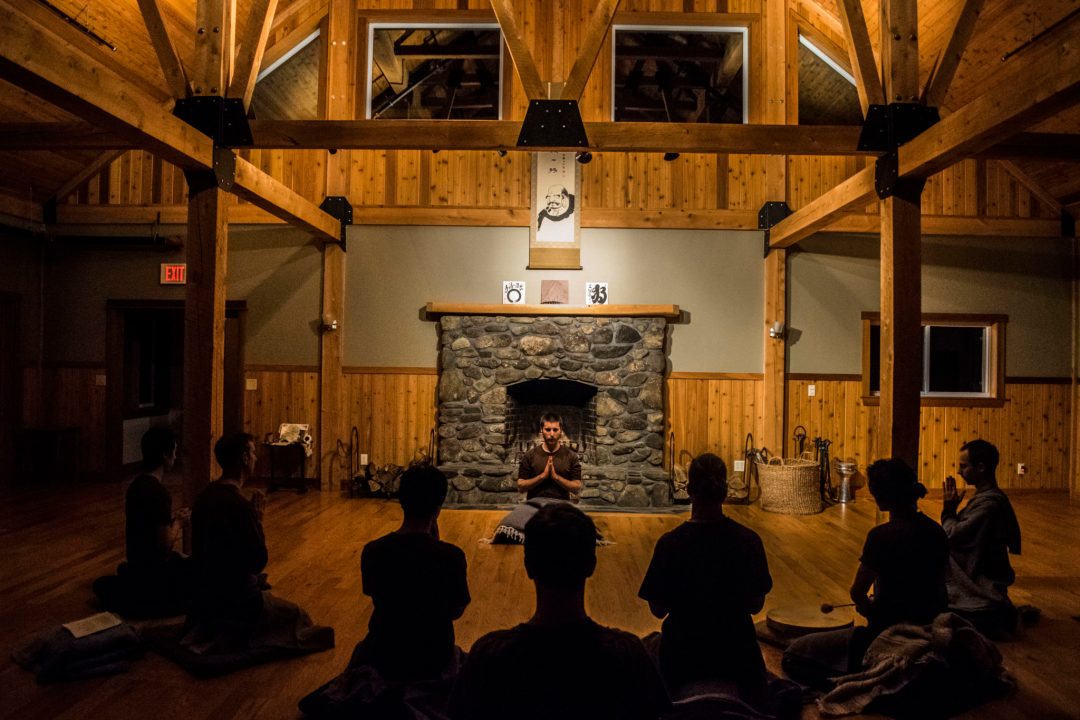
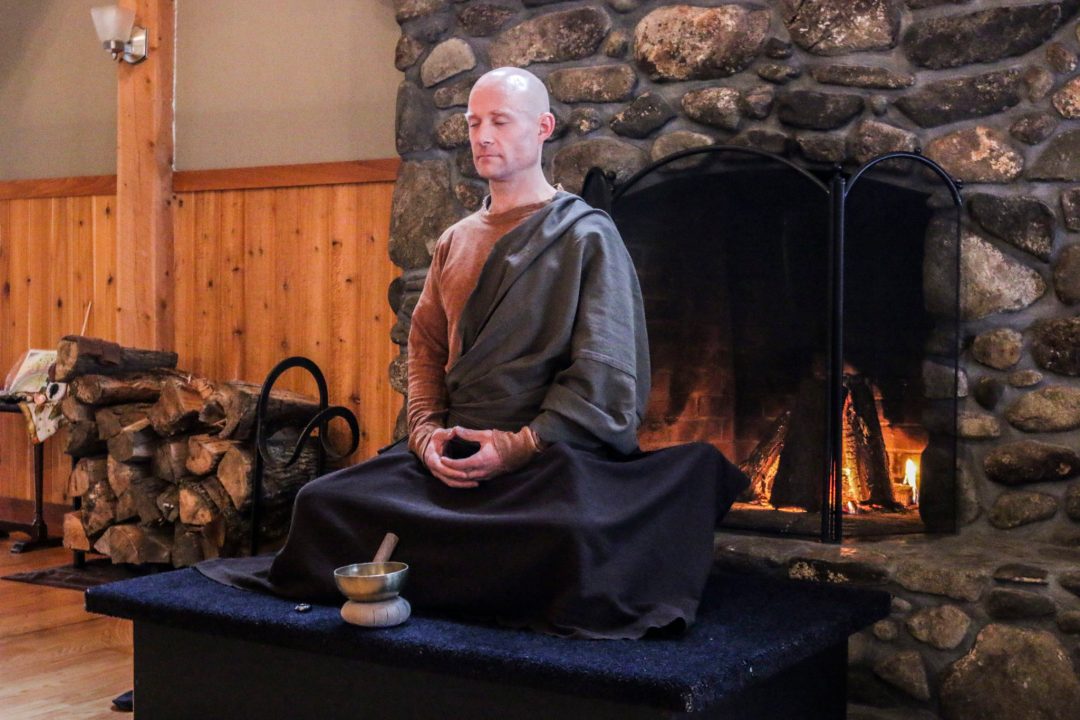
In much of our culture, having your own perspective is seen as the very essence of wisdom. In a spiritual training container, people are attempting to let go of their own perspective in order to realize wisdom and compassion. A monastery is a place where people can do this in modest seclusion, in order to then be able to offer clarity to all. In the context of a visiting reporter, the leadership of such a container is balancing the need to, on the one hand, communicate with society about the good work being done within the monastery, and, on the other hand, not derail the training of those who have come to do deep spiritual work.
Long ago in our society there was a culture-wide understanding of what a monastery is, and what the people in it would be doing. In some places, this still exists, but in the West it has been completely lost, to the great detriment of our society. Monasteries are a crucial institution class for guiding the ethics of civilizations. Our society’s destructiveness over the past several hundred years correlates with the absence of monasteries over that same period. Monasteries cannot exist without a culture that emphasizes the importance of relating to them in healthy ways.
Response To Kyle
Towards the end of the article Sam brings in perspectives from Kyle Hubbard, who trained at MAPLE for several years, and has since become part of an apparent rationalist project to label MAPLE as a cult. One of our trainees recently responded in depth to his claims, some of which are repeated in his quotes in Sam’s article:
One resident said that he’d taken to repeatedly punching himself in the head to deliberately inflict brain damage, because his intelligence was getting in the way of his spiritual development.
If MAPLE is clear on anything, it’s that self-harm is not acceptable or part of spiritual practice. The use of self-harm is repeatedly and soundly discouraged here.
Kyle is quoted as saying
“They bring people in and break down their epistemics, make all their previous life actions seem shameful or wrong, pressure them using guilt and shame into a new framework, and then reward it with love and belonging,”
This is the opposite of the truth. We do not do this, period. This claim, and others like it from Hubbard, seems to us not merely a mischaracterization but part of a deliberate project by a group that is competing with us to influence the ethics of AI systems. A trainee recently posted an in-depth response to Kyle Hubbard’s claims entitled The Case For MAPLE.
Conclusion
Sam’s article is the first example, to our knowledge, of an article in a national magazine that discusses the AI problem as being downstream of mistaken religion (rather than religion being downstream of AI, which is a common trope). This is a very important realization, and we look forward to further discussion on this.
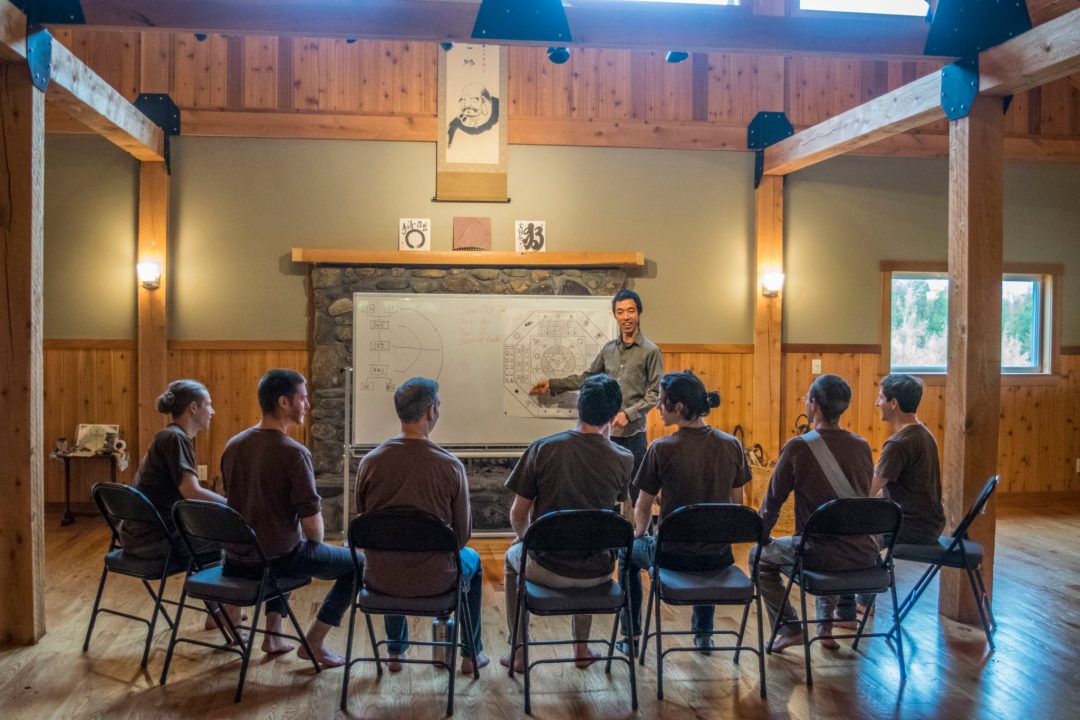
To continue the conversation with us, we recommend that you visit us in person. To do that, fill out a guest form. If you’re interested in joining our training program, fill out a training interest form.
Upcoming Events
December Awakening Week with Soryu Forall
December 7
- December 14,
2026
January Awakening Week with Soryu Forall
January 15
- January 22,
2027
February Two-Week Awakening Period with Soryu Forall
February 6
- February 20,
2027
March Awakening Week with Soryu Forall
March 15
- March 22,
2027
April Awakening Week with Soryu Forall
April 20
- April 27,
2027
May Awakening Week with Soryu Forall
May 13
- May 20,
2027
Dates are subject to change